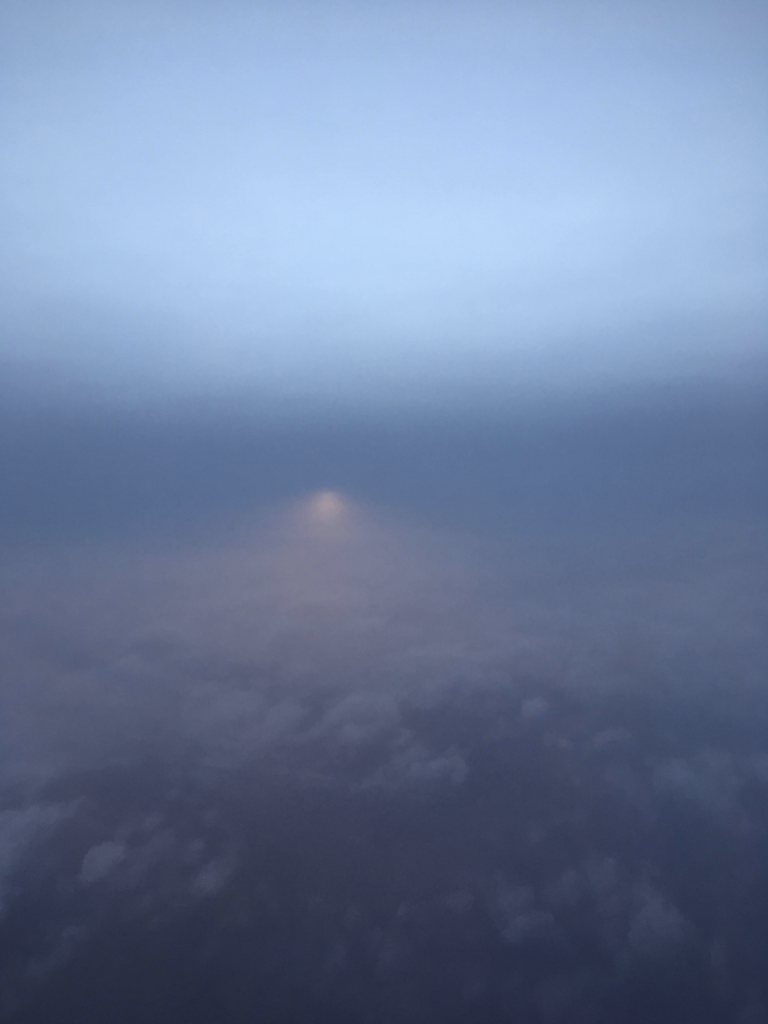
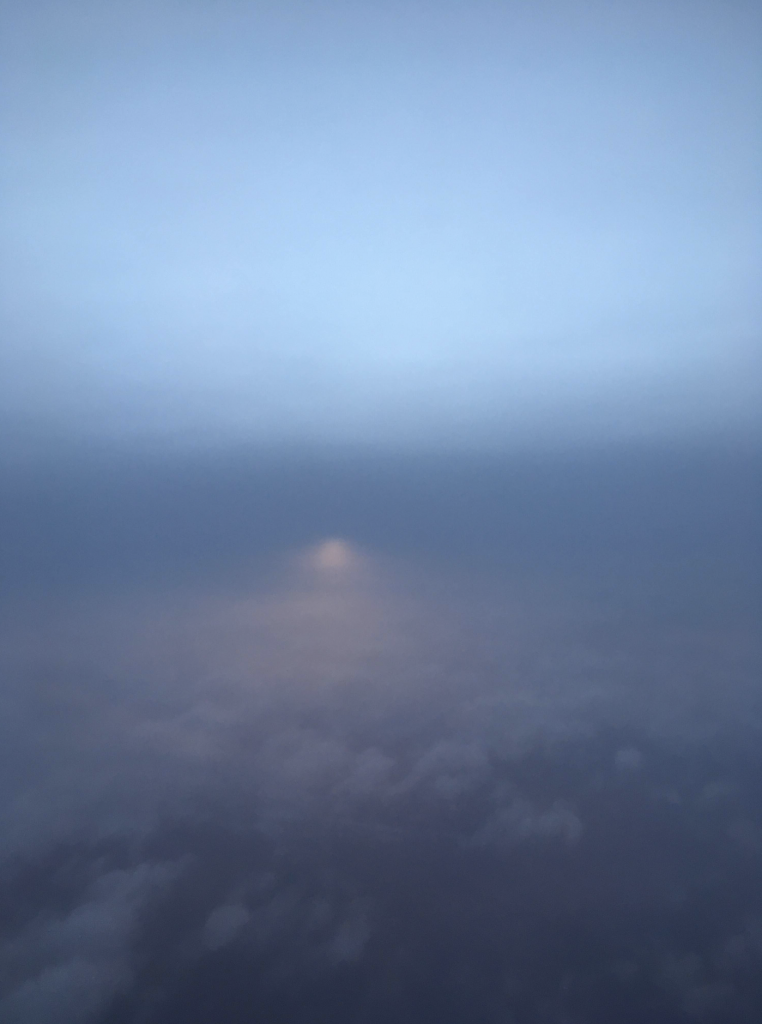
This project ponders on the aesthetic dilemma of the immediacy of contemporary image production, which currently seems to displace the moment of the sublime to focus solely on the beautiful, thus tearing apart the aesthetic reflection that is developed through technique and the technical-analytical faculty, which the artist develops when trying to capture a transcendent image. >> Continue Reading
In Search of the Self, Image and Spirit
Omar Rosales
The contemplation of nature is to manifest the desire to dissolve, to dissolve in the environment, to return to the origin where all the elements that make up the world coexist in the same ontological degree: the human being, the rivers, the animals, the plants, the air and the rain without distinctions or hierarchies. Contemplation calls for a self-emptying, a distancing from the self in order to be us, the world. >> Continue Reading
Untitled No.2. From the series In pursuit of the sublime, 2022
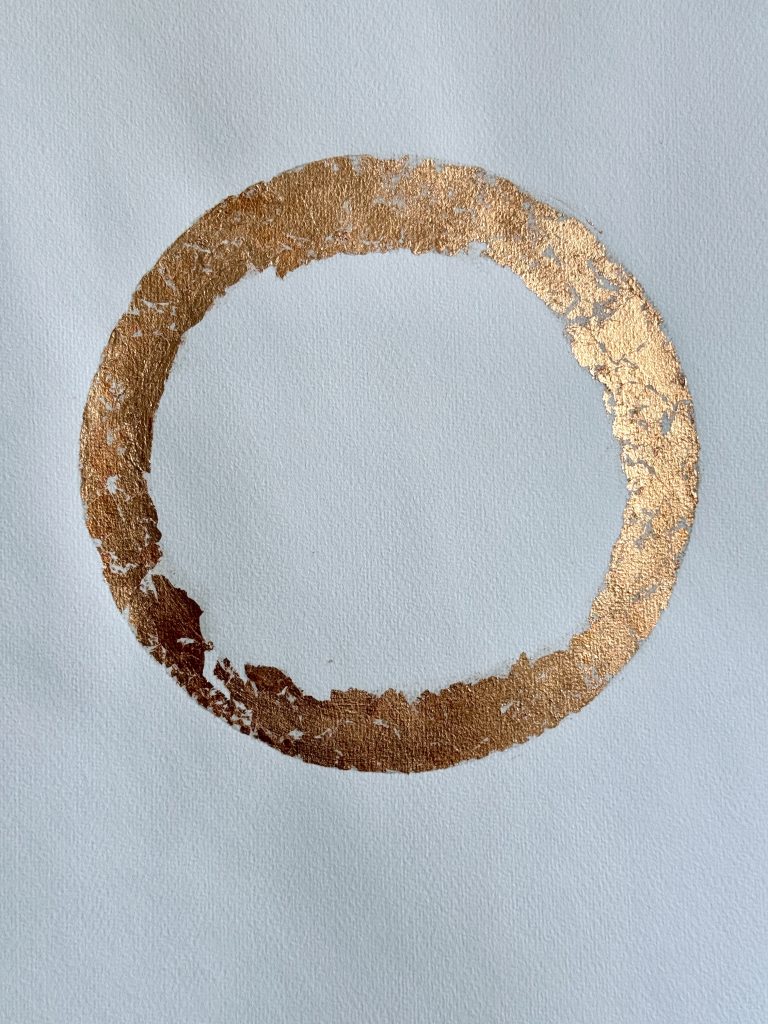
On Perfection #17. Artist Series. 2024
ON PERFECTION
Does perfection exist? This series reflects on the quest for that utopia known as the “perfect,” which intertwines the most complex concepts of our desires, overshadowed by the impossibility of its own existence. While perfection resides in the realm of the unachievable, its encounter is made possible through the small fragments that compose the whole. This series consists of seemingly circular pieces created from tiny sheets of various metals, forming the imperfect shape of circles. The circles are created through a meditative process of adhering them until they become a unified whole.
ON TIME
Is it possible to truly understand time? We are contained within it; it permeates us and defines us. As such, any attempt to conceptualize it may become limiting. Perhaps all we can do is interpret it, and in doing so, live through it.
From the perspective of mythical notions of time, its form is cyclical. We exist within eternal cycles, as time and the universe unfold and fold before us, reflecting their infinite-finite and finite-infinite nature.
For me, one of the most beautiful ways to understand time corresponds to the cycles of the dynamism of the wheel of Saṃsāra in its broadest expression, resting in the concept of “uji,” or “being-time,” coined by Dōgen, the founder of Soto Zen in Japan.
He articulates the non-duality of existence and time, a state that can be experienced when one reaches the highest level of being, allowing for the perception of the inclusive nature of everything as one.
In this concept, u signifies “existence” or “being,” while ji represents “time” or “occasion.”
.
07
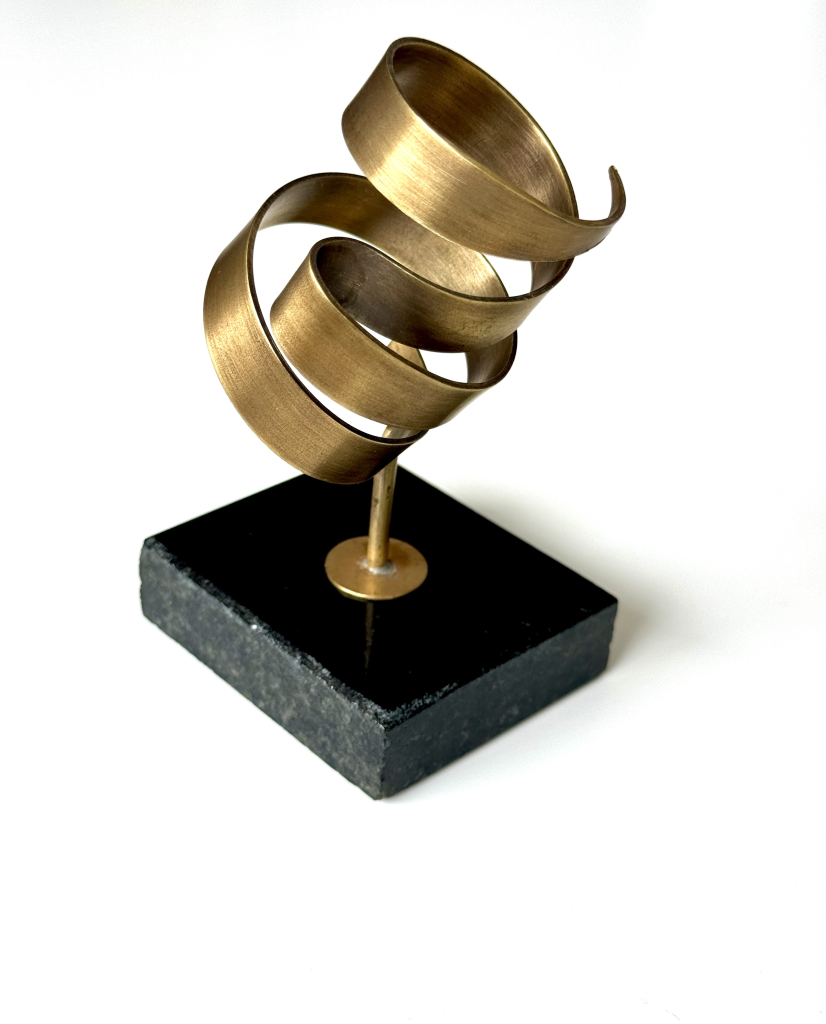
On Time #14 . 2024
STUDIES OF REALITY
2016-2021.
Engaging on a perception from a material/electronic/symbolic/digital environment implies that the participant assumes itself (I, perceptive unit) as an hybrid component of an interactive construction in which the subject and the object are arranged on a similar axiological plane.
n Western culture, still life in the modern age emerges as a genre that alludes to the transience of life and the vanity of mundane existence—what we might call the accumulation of goods, the exercise of power, and dogmatism, among others.
The iconography typically found in “vanitas” or still lifes, such as skulls, clocks, and instruments of knowledge, is transformed in this piece by natural elements that evoke the unity of humanity and the world from which we emerged and to which we will ultimately return, at the end of our human lives.
The series Memento mori: Remember That You Will Die, revives one of the many forgotten genres in the history of art, serving as an exercise in simplicity in the face of a world overwhelmed by crises, whether natural or moral.
.
07
From the series Memento mori. No title #6, 2023
DOUBTING THE EVIDENT:
Conversations after a century of Duchamp's Fountain
2017
Through five international interviews with specialists from various disciplines of art theory, this project opens up the possibility of reflecting on the relevance of the iconic modern artwork “The Fountain” by Marcel Duchamp (1917):
Matthew Affron: Curator of the Philadelphia Museum of Art, which houses the largest collection of works by M. Duchamp. [U.S.A.]
David Campany: Image theorist. [U.K.]
Kathrin Becker: Art historian and curator specializing in video art. [Germany]
Horacio Zabala: Visual and theoretical artist. [Argentina]